

Your ERP runs essential transactions. Your CRM holds customer activity. Your data platforms support analysis. ProfitOptics builds pricing, quoting, and rebate capabilities around that environment, connecting the information and workflows the business needs.
People need product, customer, cost, and agreement information to decide. When those inputs are difficult to reach or interpret, another lookup or spreadsheet becomes part of the process.
We shape the architecture around the role of each system and the capability being added.


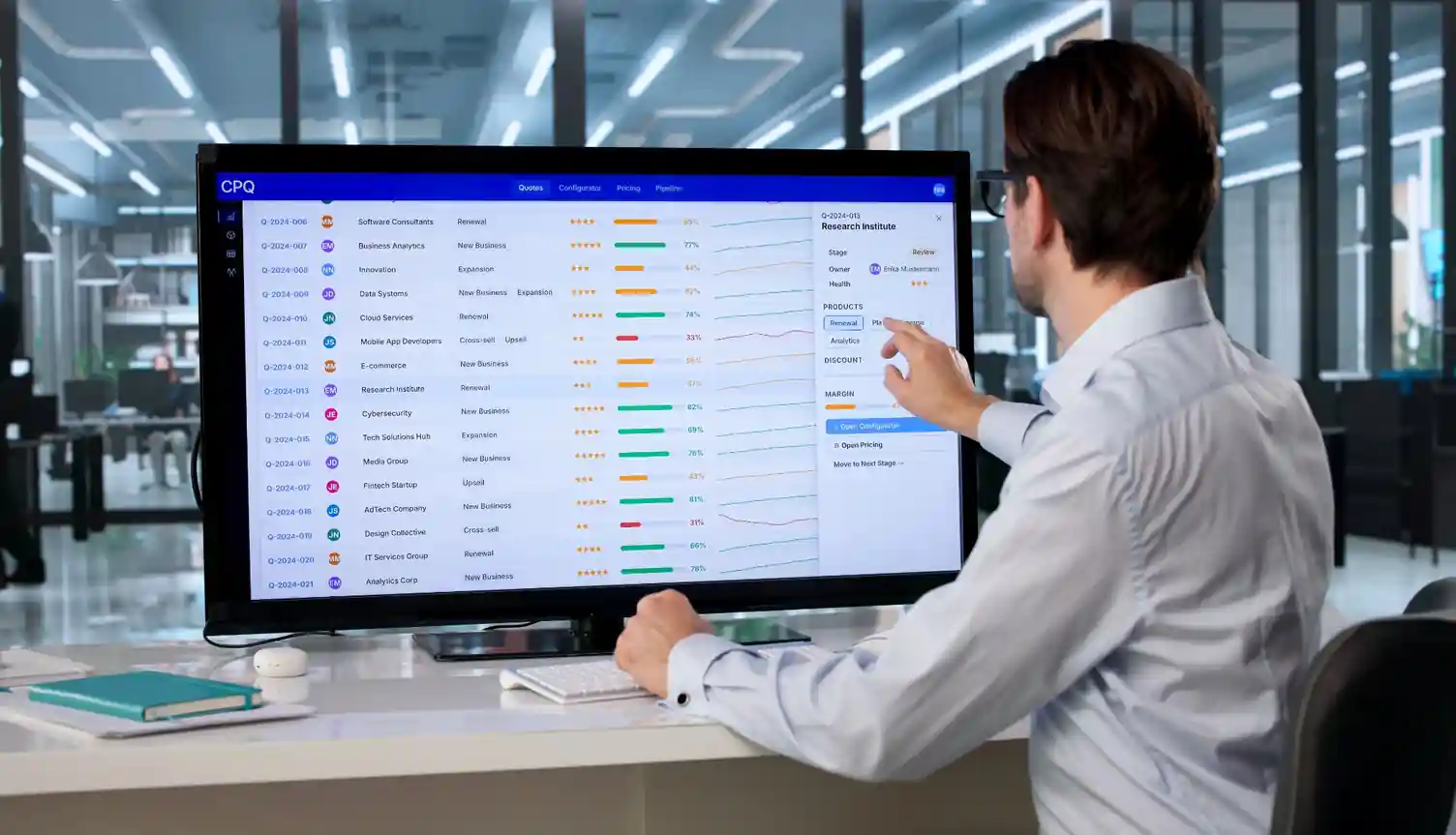
We work across ERP, data, and operational environments. The right connection depends on the product, version, available access, data, and workflow requirements.
-
ERP environments
SAP S/4HANA and ECC; Infor CloudSuite Distribution, M3 and SX.e; Microsoft Dynamics 365; NetSuite; Epicor P21 and Eclipse; Acumatica; Sage X3 and Intacct; Oracle Fusion and JD Edwards; and homegrown systems. -
Data platforms
Microsoft Fabric and existing data environments used for integration, preparation, reporting and analytics. -
CRM, PIM and operational applications
Salesforce and other systems holding customer, product and workflow information.
Your team shouldn’t have to check three systems to make one decision. We start with what people need to price confidently, move a quote forward, or check a rebate claim, then work out how your existing systems can bring that information together.
Integration works alongside data preparation, reusable technology, and engineering. Together, they turn a connection into a capability the business can use.
We build around existing ERP, CRM and data platforms. We’ll look at what you use, what information your team needs and how it can move between systems. Some connections are straightforward; others need tailored work. We’ll help you understand what’s involved in your environment.
We can work with homegrown systems, too. We’ll look at how yours works, what information it can share and what your team needs to do. That helps us determine how to add the capability you need while keeping the system your business relies on.
Reducing that back-and-forth is a key reason to connect them. We look at what your team needs to see together—such as costs, customer agreements or rebate details—and bring that information into the workflow. What’s possible depends on the systems you use.
The list shows the systems we can work with; it doesn’t mean we have a partnership with each vendor. We’ll talk through your particular setup and what’s needed to make the connection work.
Where your systems allow it, yes. For a medical equipment manufacturer using SAP and Salesforce, we brought pricing guidance and margin-based approvals into the quoting workflow. The aim is to put useful information where people need it, with less searching and fewer extra steps.
Thinking about your next technology investment? These lessons from distribution teams can help you see what to look for—and what to avoid.
Tell us what you wish your team could do more easily—from pricing and quoting to managing rebates. We’ll explore how tailored capabilities, connected data, and your existing systems can work together to reduce manual work and help your team make better decisions.