December 4, 2025
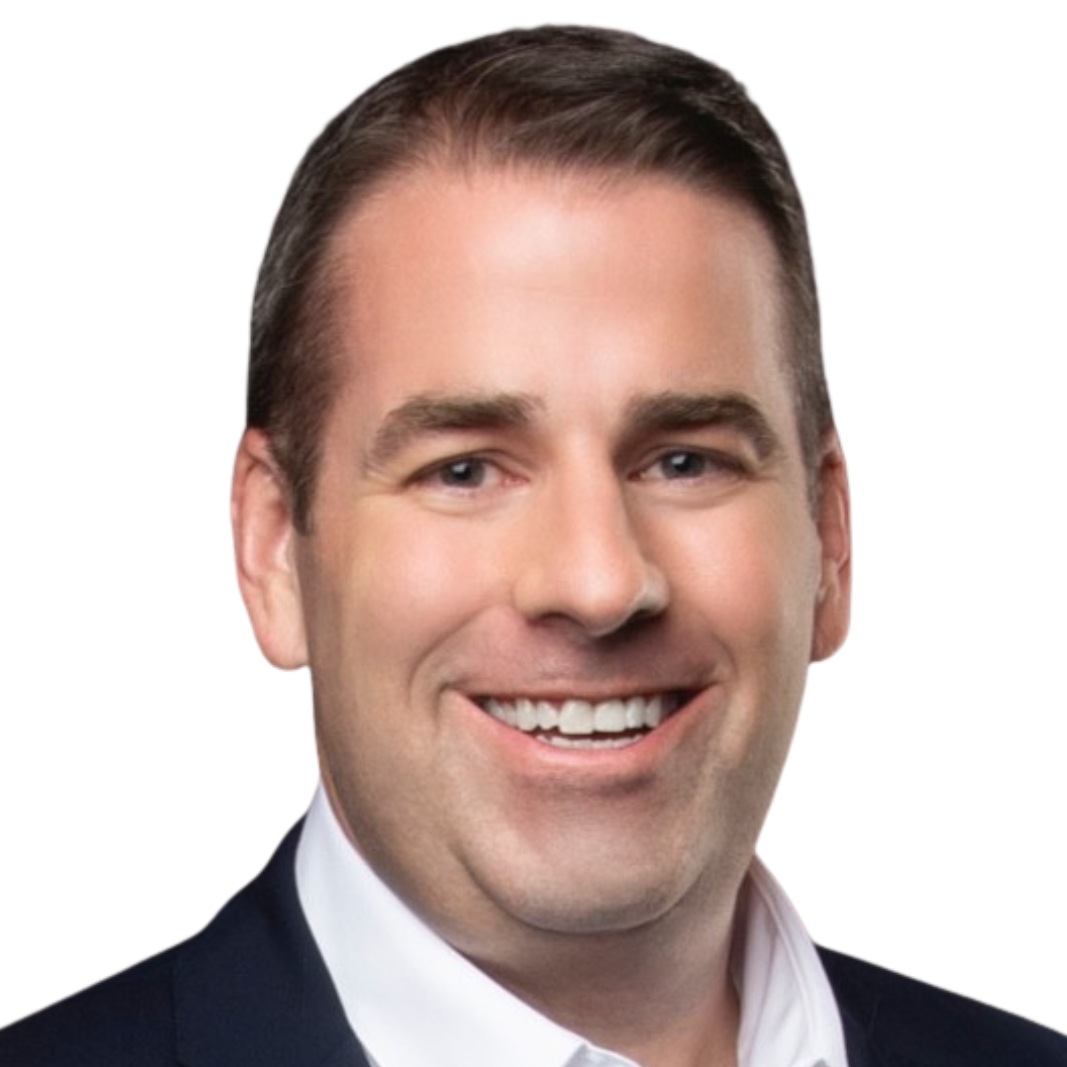



A Q&A with Mike Farmer, Executive in Residence at ProfitOptics
Mike Farmer didn’t set out to be a distribution executive. He started in psychology, fell in love with leadership and servant-led cultures, and then got a crash course in business fundamentals from a CFO who walked him through the financials every month over lunch. That blend of people-first leadership and hard-nosed understanding of the P&L eventually carried him into senior roles at Stock Building Supply, BMC, and Builders FirstSource—where he helped navigate multiple mergers, rapid growth, and shifting customer expectations.
Today, as Executive in Residence at ProfitOptics, Mike brings an operator’s mindset and a career of hands-on experience to the problems distributors face every day. He’s been the leader in the chair making the decisions—now he’s helping shape solutions that actually work in the real world, not just in a slide deck. We sat down with Mike to talk about why data is still so hard for distributors, how to think about AI without boiling the ocean, and why he thinks this moment—tumultuous as it is—might be a surprisingly good time to be in distribution.
Mike Farmer: For me it’s always been a one-two punch of people and financials.
Early on, I had this great setup: I’m in HR, but I’ve got a CFO who’s willing to sit down once a month and walk me through the full financials of the business. That combination—understanding the P&L and really caring about how people work and win together—shaped everything.
If you enable your people and give them tools and resources to make smart decisions, you’re going to win more times than not. Especially in distribution, which is so relationship-driven.

Mike Farmer: A big part of it is underinvestment. A lot of distributors have tried to get by with older systems for a long time.
Then you layer on mergers and acquisitions. Now you’ve got multiple ERPs, different ways of structuring data, and a lot of people bringing their own assumptions to the table. That compounds the problem.
There’s also the reality that distribution is a low-margin, cyclical business. When you’re growing fast or dealing with market swings, your best people get pulled into immediate revenue and operations issues. Those are the same people you need to run system conversions or data initiatives. So the long-term projects get pushed off “until later.”
The irony is: the bigger you get, the scarier it is to rely on an old solution.
Mike Farmer: I think one of ProfitOptics’ biggest advantages is the people. You’ve got a lot of leaders here who have actually run distribution businesses.
I’ve seen plenty of projects where you bring in smart technical folks who don’t understand day-to-day distribution reality. That’s where you miss things and make mistakes that hurt the business or the customer.
With ProfitOptics, you’re working with people who know what you’re dealing with. They’re not trying to “solve everything” in one shot. They come in with a very specific, surgical focus: improve this process, solve this data problem, support this pricing or inventory decision.
That’s how I would coach a colleague to think about it: look for a partner who understands your world, has done it before, and is willing to go after targeted wins instead of a giant rip-and-replace.

Mike Farmer: The smart use is focused.
The low-hanging fruit is usually around customer and product:
Once you hit a certain scale, the data is there. You just need a way to get it out and present it in a useful way. AI and machine learning can help you do that—spot patterns and surface the next best action—without asking people to live in a giant spreadsheet.
But you don’t need AI everywhere. My advice is: pick two or three areas, make a strategic bet, and see what works. That’s what the smart companies are doing.
Even on the nonprofit board I’m on, we’re doing the same thing—using AI to find donor opportunities in a couple of focused areas, not to “replace people.”
Mike Farmer: Top of the list would be true wallet share and market share.
For years, that was a huge struggle—especially with national accounts. I wanted to know: What is my real share of this customer’s spend, nationally and locally?
When you understand that, you can make much better decisions about where to spend your time:
Then there’s pricing. Understanding how customers actually buy, where the thresholds are, and what elasticity you really have—that’s where I’ve seen some of the biggest value in my career.
If you can keep sales flat and improve price by even one percent in distribution, that’s a big deal. But you need good data and good tools to see that and act on it confidently.

Mike Farmer: Fifteen years ago, hardly anyone was tracking fill rates or on-time-and-in-full performance in a serious way. That still blows my mind.
Now, the more sophisticated distributors are measuring and sharing those things with customers. For big builders, cycle time is a huge metric—how fast they can get a house in the ground and sold.
When you get the right leaders in the room and you can show them, with data, how you’re improving cycle time or outperforming on on-time-and-in-full, price comes a little more off the table. It becomes more about how you create value together.
Mike Farmer: Honestly? I think it’s a really interesting time—and a good one if you’re prepared.
Yes, housing starts are down. Yes, rates are high. Builders are getting squeezed, so they’re trying to compress distributor margins too. Everybody’s fighting over a smaller pool of opportunities at lower margins.
But periods like this create separation.
If you can:
…you can set yourself up really well for when the market turns.
I’d be thinking hard about loyalty, buying cycles, and long-term relationships. If I take a hit on margin now, am I setting myself up for 12–24 months of profitable business later? That’s the kind of question you want your data to help answer.
Mike Farmer: (laughs) The licensing alone.
To ship to all 50 states, I need around 85 licenses. There are only 50 states, but in many places you need separate licenses for wholesale and direct-to-consumer. The laws are old, they’re inconsistent, and every state plays by its own rules.
On top of that, wineries aren’t exactly known for great data. When we bought ours, I inherited almost no real customer information—no lifetime value, no clear picture of who we should be talking to.
And just like distribution, system conversions can take way too long. I was just talking to a friend who’s been in an eight-month conversion for a 15-SKU business. I told him, “Come on, it shouldn’t be that hard. If you’re gonna do it, put focus on it and get it done.”
So yes—messy data, inconsistent systems, customer gaps. Both industries have more in common than you’d think.

Mike Farmer: Start small, but start.
Pick one or two areas where you know better data and better tools would move the needle—pricing, inventory, wallet share, customer experience—and focus there.
Look for partners who:
And then give your best people the time and support to actually use what you build.
If you’ve got good people and you put good data in their hands, you’re going to make better decisions. In a tough market, that’s often the difference between treading water and coming out ahead when the cycle turns.
Curious how other distributors are using data to make smarter decisions? Let’s talk through what we’re seeing in the market.