August 11, 2026




If you take anything away from this article, I want it to be this:
The challenge with fuel costs is that they can change quickly, often in response to events that are difficult to predict.
One week, it may appear that geopolitical tensions are easing and fuel prices will stabilize. The next week, conditions change again.
That uncertainty can make it tempting to delay action. But waiting for fuel costs to fully reach the business leaves less time to determine what is addressable, prepare customer conversations, and put pricing changes into the market.
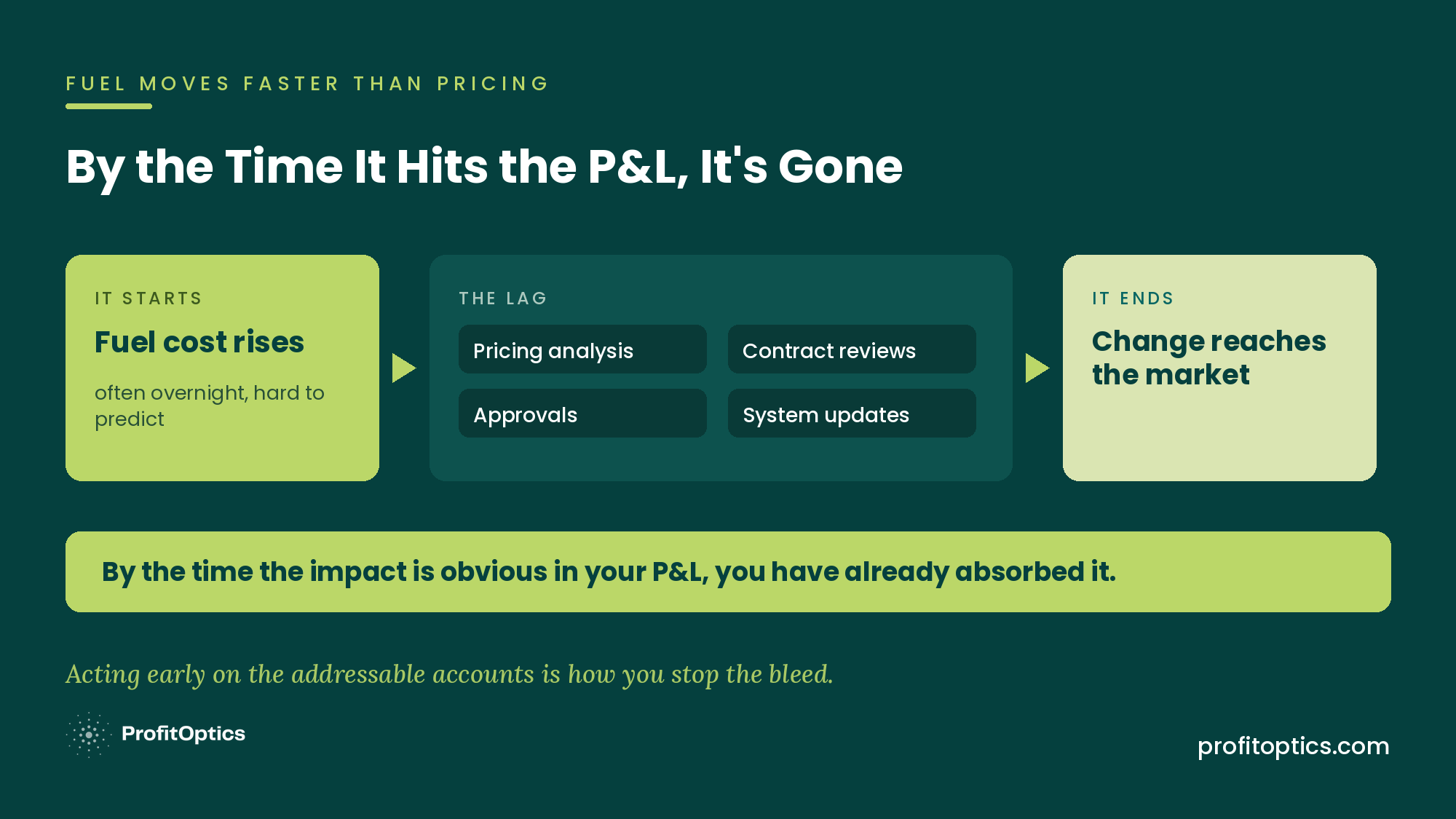
By the time higher fuel costs are visible in your P&L, the company has already absorbed them. Pricing changes, customer analysis, contract reviews, approvals, and system updates all take time. Waiting until the financial impact is obvious usually means you are already behind.
That does not mean you should react to every short-term movement in fuel prices. But you should have a process for evaluating the exposure and deciding what you need to do before margins begin to deteriorate.
Fuel and tariffs are different cost drivers, but from a pricing perspective, they create the same questions:
The answers aren’t as straightforward as just applying the same percentage increase to every customer.
Some customers have long-term contracts, and some agreements allow price changes under certain conditions, while others do not. The financial exposure varies significantly from one account to another.
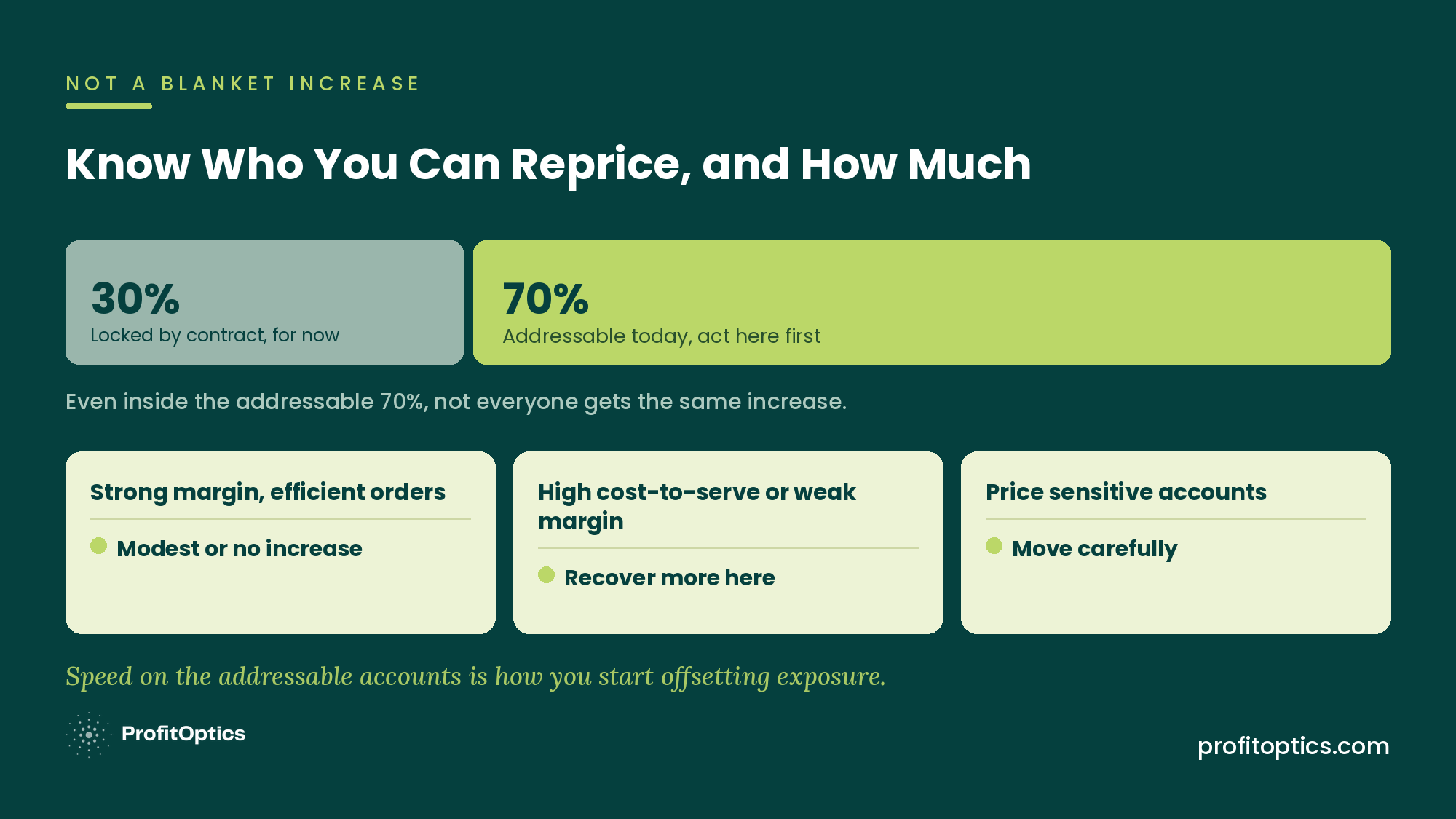
Assume, for illustration, that contractual agreements prevent you from immediately addressing 30% of your customer base or sales volume. You still have to recover enough of the cost increase to protect profitability, but you can only take immediate action across the remaining 70%.
This is also why speed matters. If some customers cannot be addressed, acting earlier across the addressable portion of your portfolio can help you begin offsetting your exposure.
Even within the addressable group, though, not every customer should receive the same increase.
Some accounts may already generate strong margins and order efficiently. Others may create substantial delivery costs or have weaker profitability. Some may be highly sensitive to price changes, while others may have more flexibility.
Your pricing team needs to understand who can be repriced, who cannot, where the greatest financial exposure exists, and how much recovery is required to keep the business financially whole.
The actual cost of the fuel is only one part of the equation. The larger issue is the cost of serving each customer. The last mile is one of the most expensive parts of distribution. Delivery frequency, distance, route density, truck utilization, order size, and service expectations all affect the economics of an account.
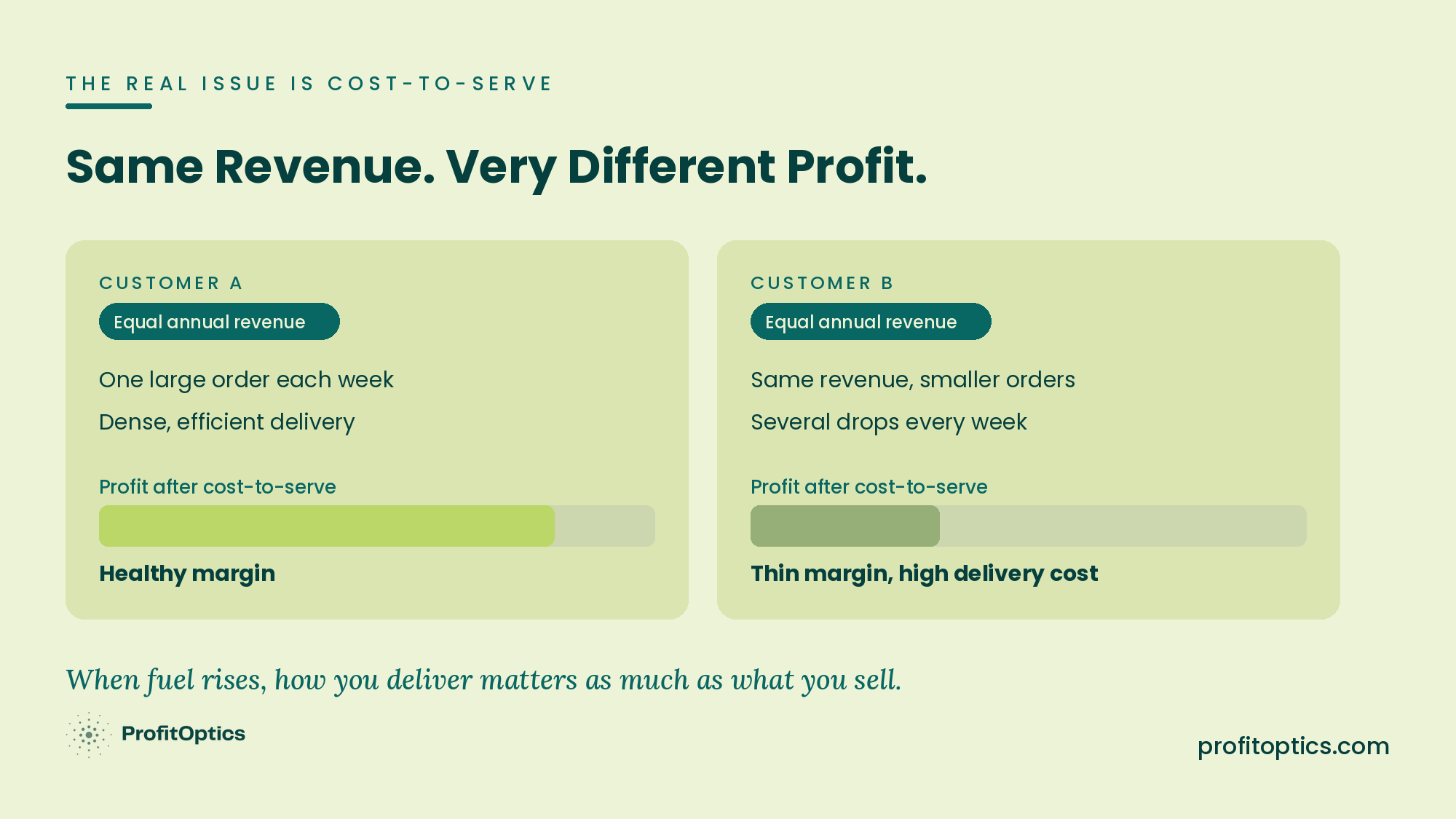
Two customers may generate the same annual revenue and have very different profitability.
Customer A may place one large order each week. Customer B may generate the same revenue, but through several smaller orders and multiple weekly drops. Improving order size does not solve the entire problem if the distributor is still making several deliveries each week.
When fuel costs rise, those differences are important.
If you don’t understand customer-level cost-to-serve, it will be hard to know whether to add a surcharge, adjust product pricing, modify delivery policies, or encourage different buying behavior. The risks include recovering too little from expensive accounts, overcorrecting with profitable customers, or applying increases in ways that are difficult to explain to the customer.
Fuel surcharges are often a distributor’s first response because they are direct and can sometimes be added quickly. There is nothing inherently wrong with a fuel surcharge. Some distributors use them successfully, while others incorporate fuel costs into their broader pricing structure.
The concern is what happens when surcharges become the default response to every cost increase. Customers understand that prices change. What they dislike is a growing list of separate fees that makes the total cost harder to understand.
The airline industry is a great example. Customers may accept the price of a ticket but understandably get frustrated when they are slapped with additional charges for bags and seats. Eventually, customers stop focusing on the total price and start questioning every line on the invoice.
Be careful not to create the same experience. Consider zooming out and focusing on changing order and delivery behavior instead:
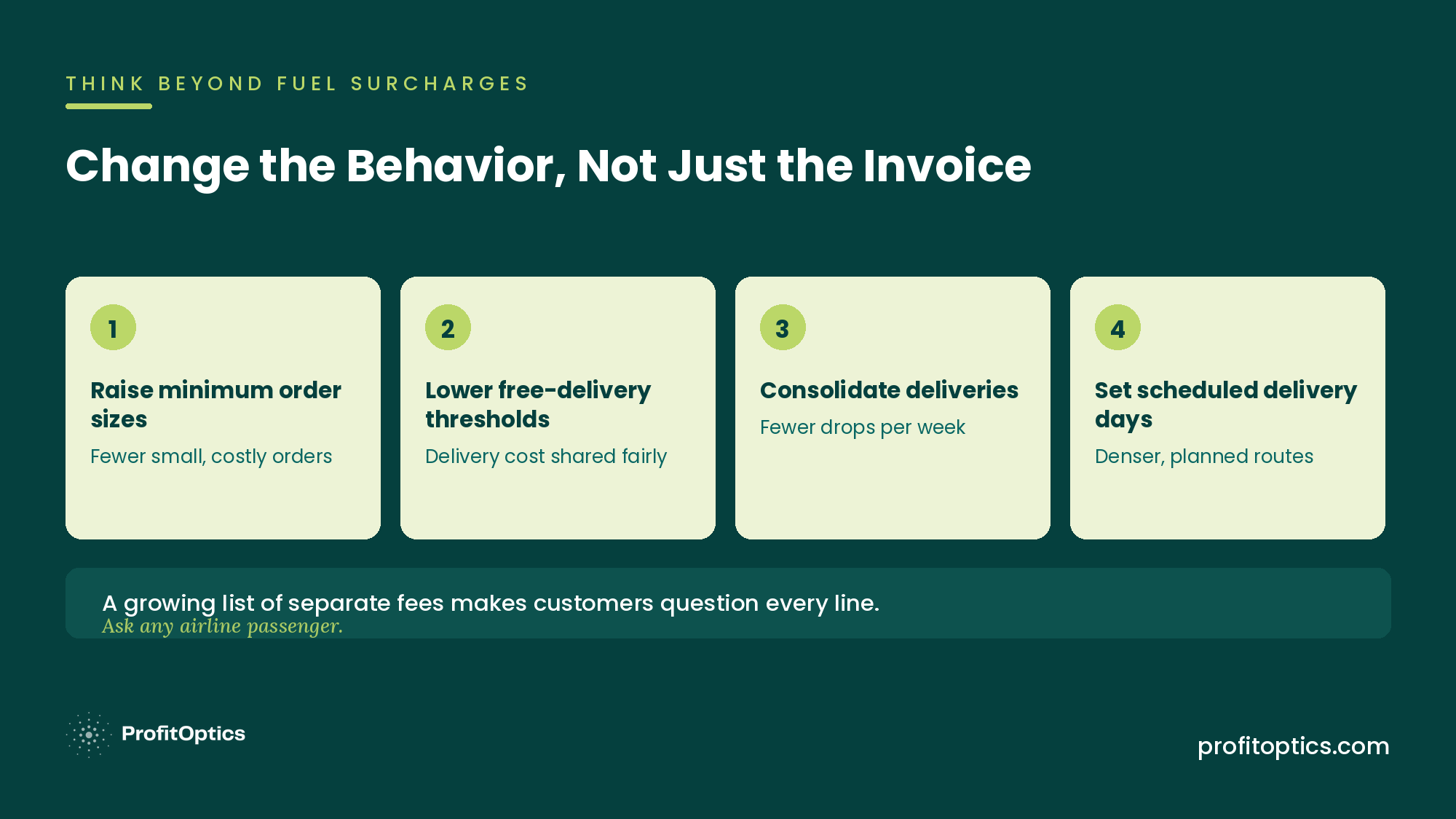
A customer may choose to consolidate orders, increase order size, or continue receiving the same level of service and pay the additional cost. That gives the customer options while improving the economics of the relationship for both companies.
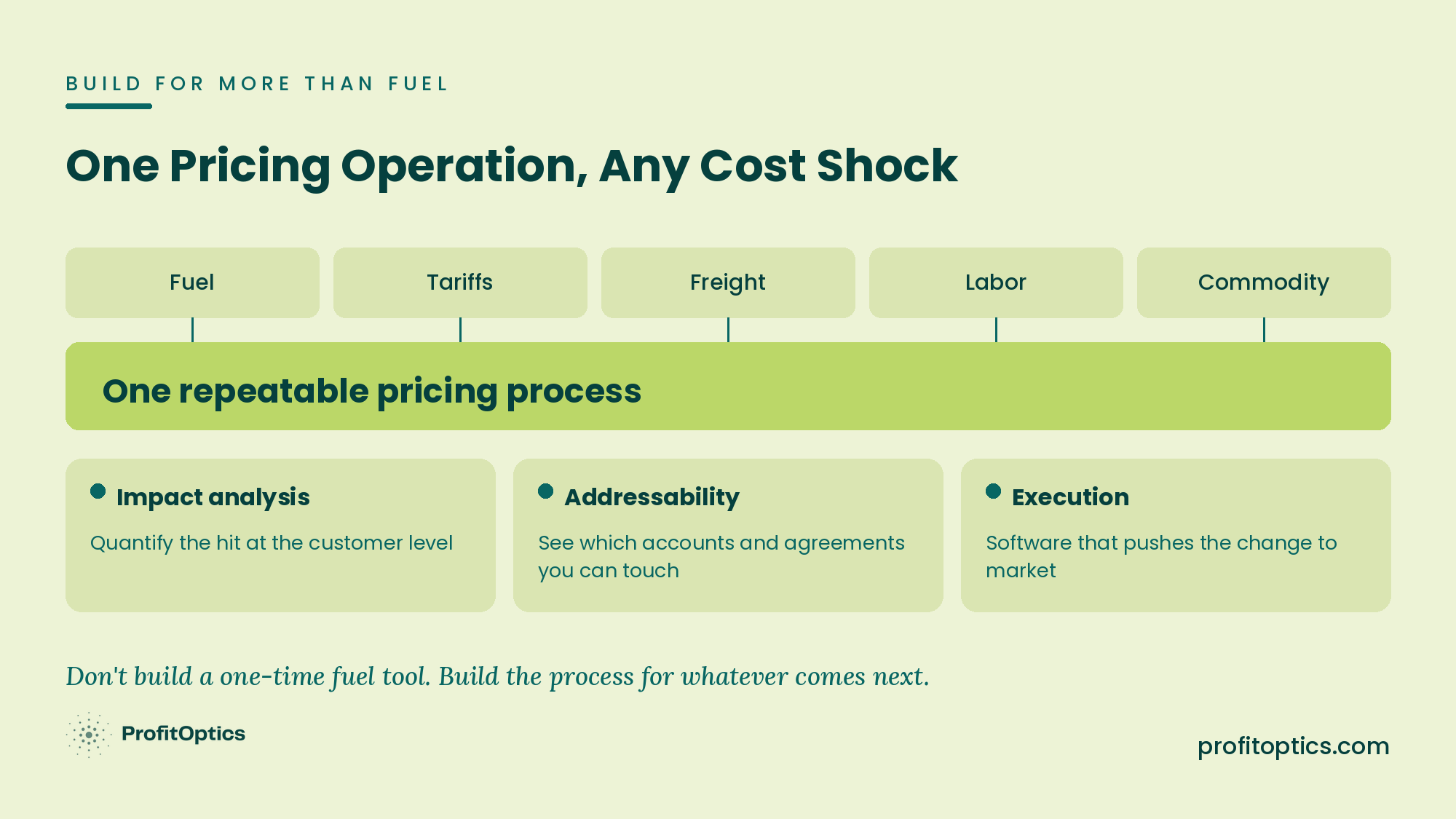
Fuel is one example of a broader pricing challenge. In recent years, you have already worked through tariffs, freight increases, supplier cost changes, labor pressures, and commodity inflation. There will be more disruptions in the future.
The faster you can move from analysis to action, the less financial ground you will lose while waiting. Companies should not have to create a new pricing process every time an external cost changes.
The same infrastructure should support multiple cost-increase events. That requires business intelligence that quantifies the impact at the customer level; visibility into which accounts and agreements are addressable; and software capable of executing the chosen approach. Without those capabilities, even a sound pricing decision may take too long to reach the market.
The objective is not to build a one-time-use fuel surcharge tool. You need a pricing operation that can respond to any cost disruption.
No distributor can predict fuel markets with certainty. The same is true for tariffs, supplier increases, and other external cost pressures. What you can control is your readiness.
That requires understanding:
Fuel volatility may or may not become the next major pricing event for your business. But it is worth asking whether your team could quickly quantify the customer-level impact, identify what is addressable, and execute the right response.
If those answers would still require weeks of spreadsheet work and manual analysis, let’s talk. ProfitOptics can help you understand the exposure, evaluate your options, and build a more repeatable process for responding to fuel, tariffs, and whatever cost disruption comes next.