August 11, 2026




In brief:
When a supplier raises costs, tariffs hit, or a competitor gets aggressive, leaders often start asking uncomfortable questions.
If those questions are difficult to answer, it’s a sign that your pricing process isn’t as mature as you thought. Don’t worry; a lot of distributors are in the same boat.
Pricing problems show up as a few extra discounts here, inconsistent quotes there, slower responses to cost increases, or margins that gradually shrink over time. Those small decisions can accumulate into a big profitability problem.
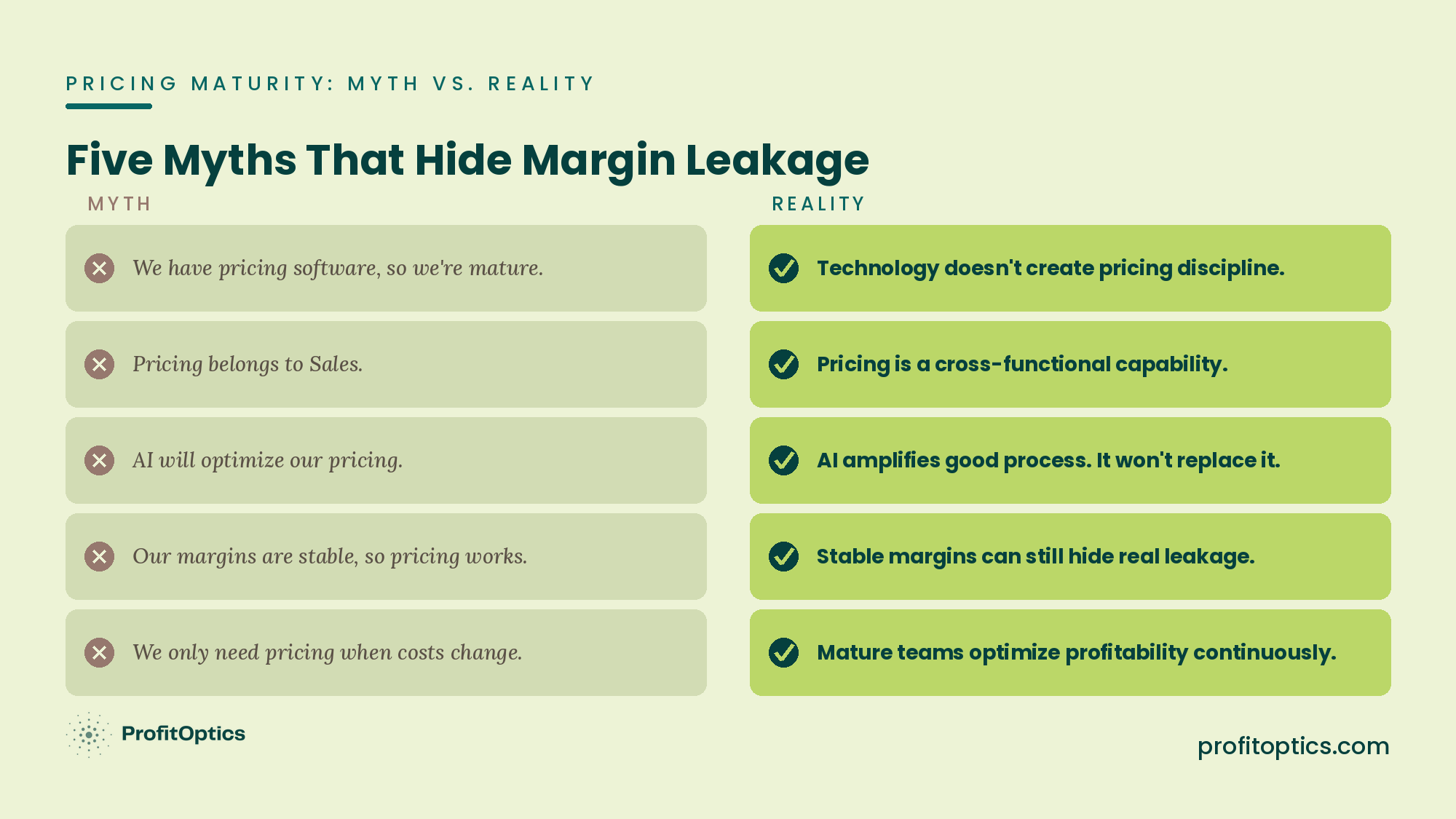
Many distributors assume pricing maturity means implementing pricing software, adding AI, or building more dashboards. Those investments can certainly help, but they aren’t what makes a pricing organization mature. Pricing maturity is the ability to make consistent profitable pricing decisions across the business, understand what’s driving margin performance, and respond quickly when conditions change.
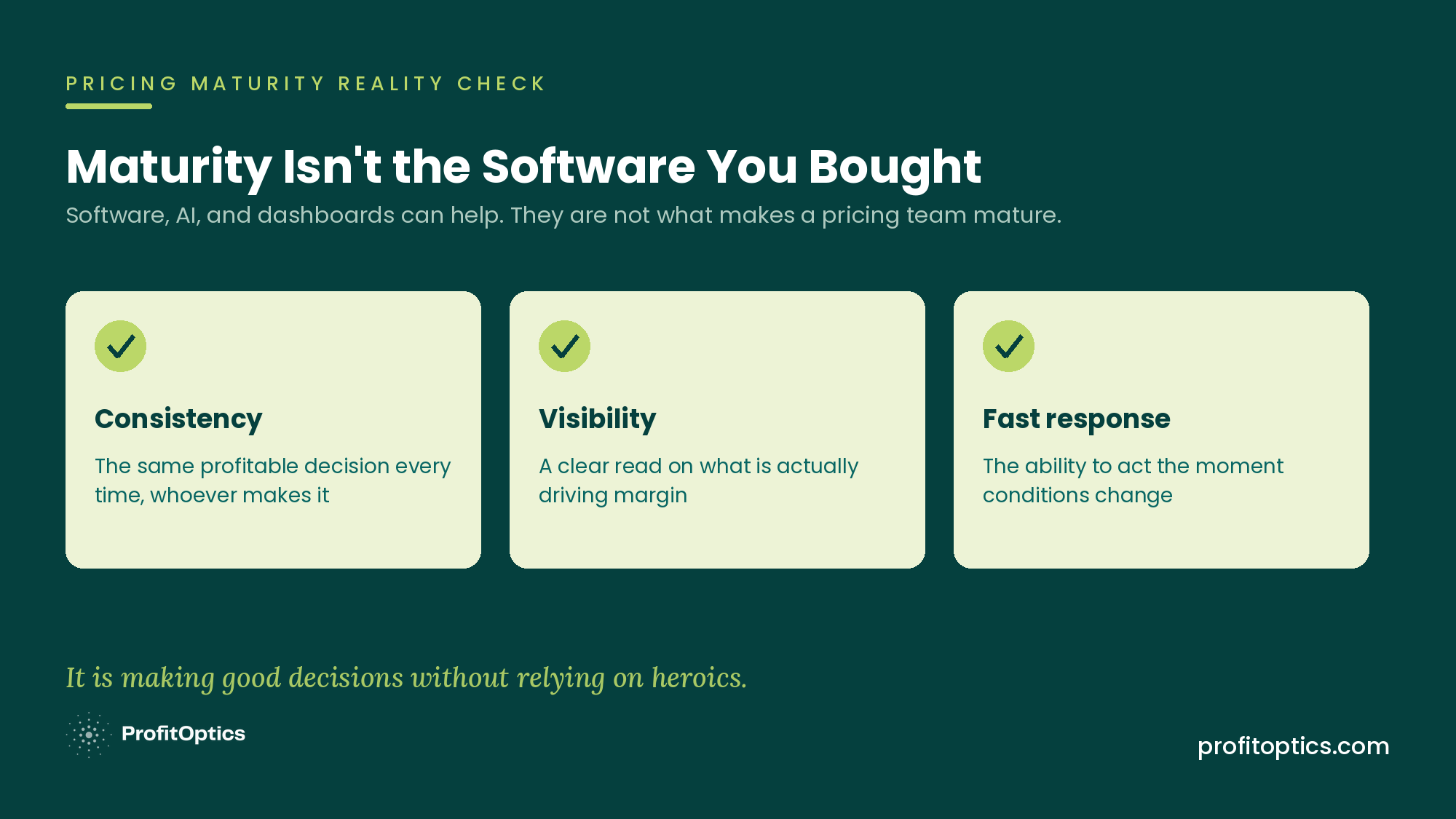
Use the below questions as a sort of reality check to get the conversation started in your own boardroom. They aren’t meant to produce a score. Instead, they highlight the characteristics that mature pricing organizations tend to have in common: consistency, visibility, and the ability to make good decisions without relying on heroics.
If the answer is no, your pricing strategy probably isn’t being applied consistently. Similar customers shouldn’t receive significantly different pricing just because a different sales rep created the quote.
If two sales reps approach the same opportunity differently, you're creating inconsistent customer experiences and making profitability dependent on who happened to answer the phone that day.
If margin moves up or down, can you identify what caused the change? Was it pricing? Product mix? Customer mix? Higher costs? Increased discounting?
Most distributors know that margins changed. Fewer can explain why. They know margins moved, but they can't isolate what drove the change.
Mature pricing organizations can separate the impact of pricing from other factors like mix, volume, and cost changes, allowing them to proactively respond instead of reacting based on instinct.
What happens when key pricing team members go on vacation or a new pricing analyst joins the company? Can pricing decisions continue consistently, or does the business slow down while people track down historical context, contract details, or approval guidance?
Mature pricing organizations don't rely on tribal knowledge. They build pricing rules, approval workflows, and decision criteria into repeatable processes that scale across teams and locations.
Discounting is often an information problem.
Imagine a sales rep preparing a quote. Do they know whether the customer is already highly profitable? Whether they're under a contract with price protections? Whether costs recently increased? Whether similar customers are paying more for the same products? Or how much margin they'll give up if they approve a 5% discount?
Without that context, discounting becomes the easiest way to win the business.
Mature pricing organizations equip sales teams with the right information at the right time, allowing them to make faster, more consistent decisions that protect customer relationships and profitability.
How many spreadsheets, emails, approvals, and manual updates are involved in creating a quote or responding to a cost increase?
Manual work isn't automatically bad.
But as product catalogs, customers, and complexity grow, manual processes become harder to scale. Manual work also slows your ability to respond to customers. Every additional approval, spreadsheet, and email introduces delay at the moment customers and sales teams are expecting quick answers.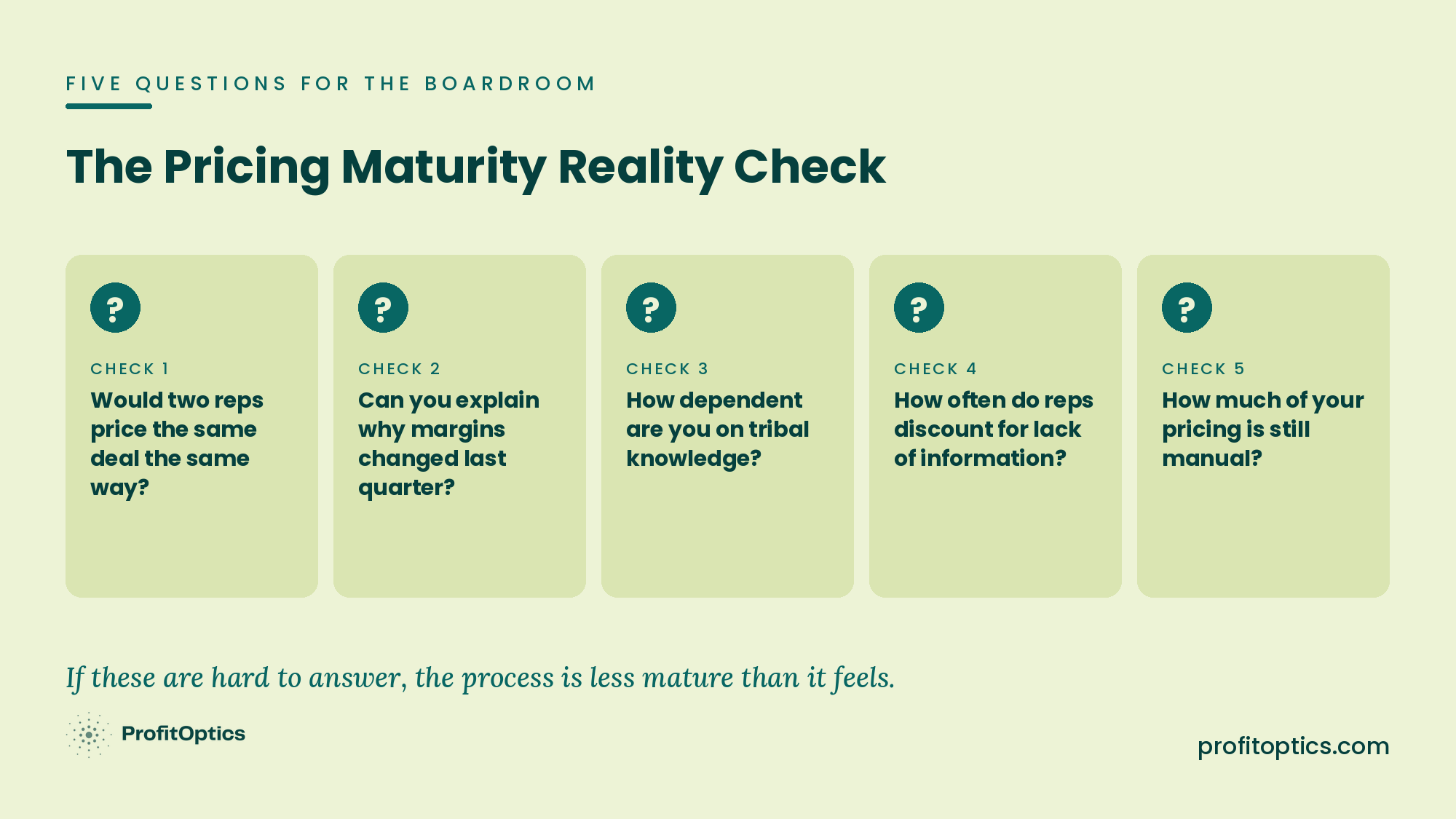
Most distributors aren’t at a single maturity level across the company.
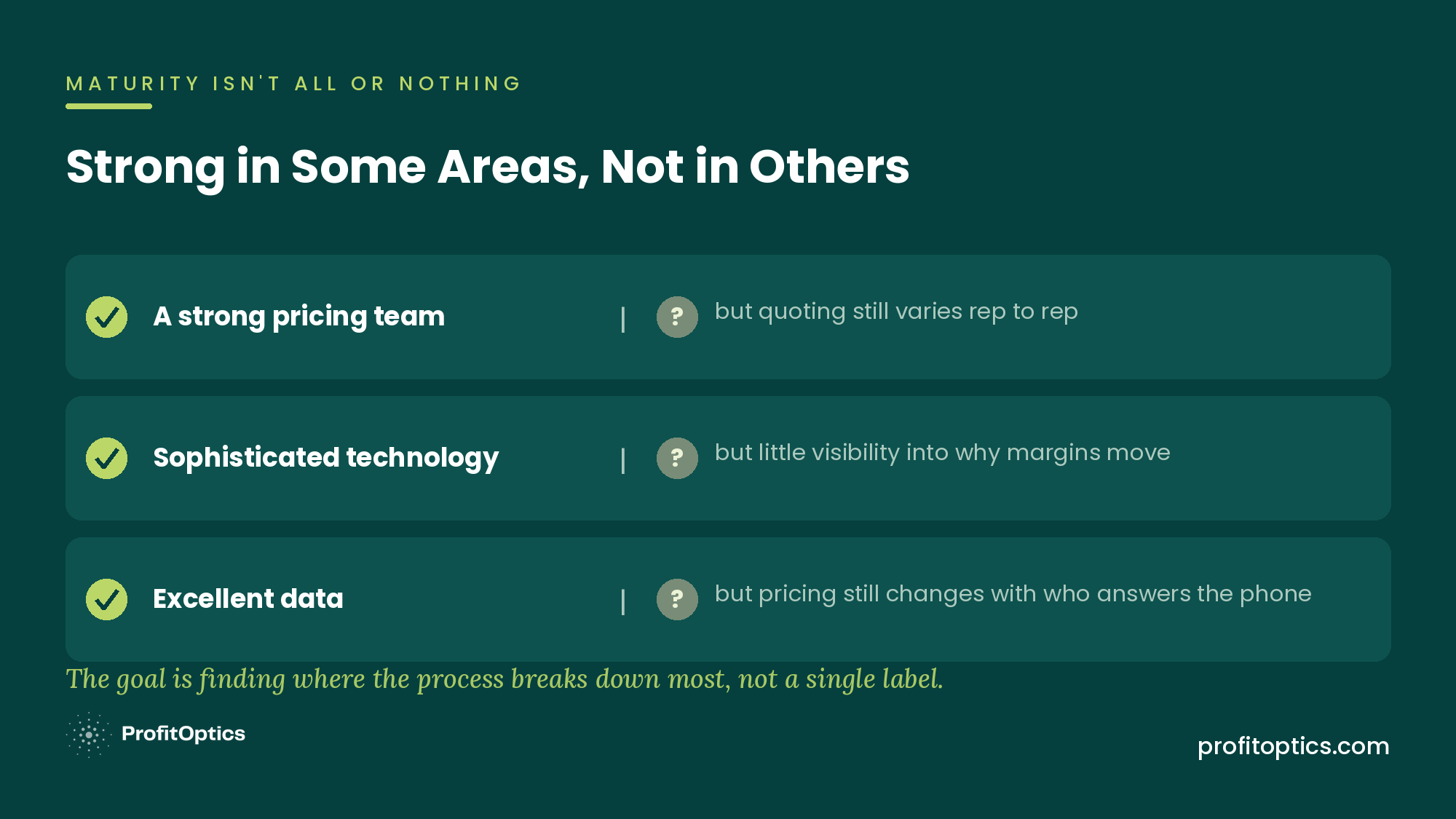
We don’t want to label your business. We want to help you identify where your pricing process breaks down most often, and where improvements can have the greatest impact on margin performance.
Want a more complete assessment? The five questions above are only a starting point designed to get you thinking. A comprehensive pricing maturity assessment looks at strategy, organizational ownership, processes, technology, and data visibility to identify where the biggest opportunities for margin improvement exist.